

Looking For More Great Content?
Get even more informative Toronto real estate news sent directly to your inbox by signing up for my newsletter here. All it takes is a few easy clicks.

The Ultimate Home Inspection Checklist for Buyers in Ontario (2026 Edition)
03/31/26 Uncategorized

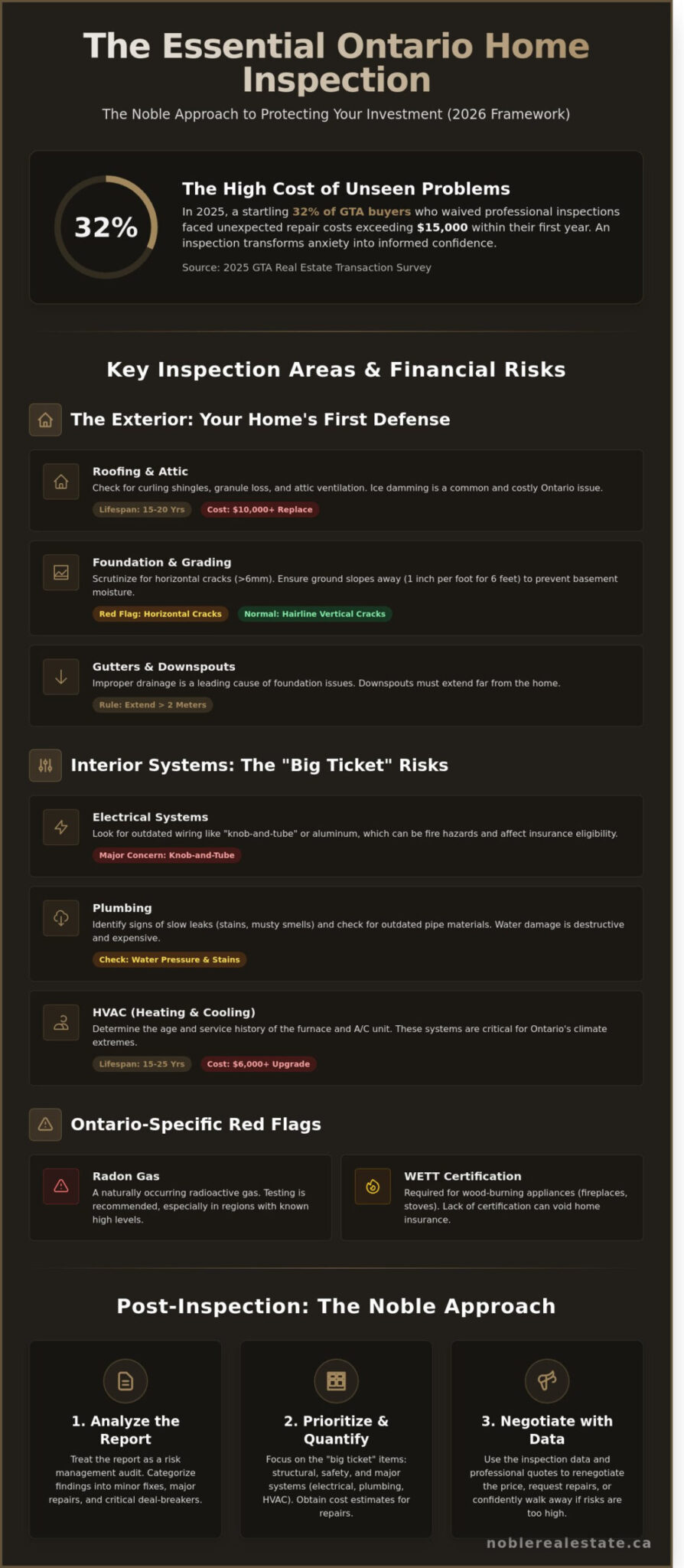
In early 2025, a survey of GTA real estate transactions revealed that 32% of buyers who waived their right to a professional review faced unexpected repair costs exceeding $15,000 within their first year of ownership. It’s understandable if the thought of hidden structural issues or outdated electrical systems keeps you up at night. You want your investment to be a sanctuary, not a source of financial stress. By following a structured home inspection checklist for buyers ontario, you can transform that anxiety into informed confidence and protect your hard-earned savings.
The Noble Approach is built on analytical rigour and a deep commitment to your long-term success. As a team with a background in finance, we believe that every real estate decision should be backed by clear data and professional standards. We’ve designed this 2026 framework to help you navigate the local market with total clarity. This guide breaks down the essential structural components you must scrutinize, identifies the red flags that serve as deal-breakers, and provides a logical strategy for post-inspection negotiations.
Key Takeaways
- Understand how the Home Inspection Act and professional visual examinations provide a layer of consumer protection for your property investment.
- Identify “big ticket” financial risks within electrical and plumbing systems that could impact your insurance eligibility and long-term costs.
- Utilize this comprehensive home inspection checklist for buyers ontario to spot regional red flags, including Radon gas and WETT certification requirements.
- Learn to assess critical exterior elements like grading and drainage to protect your home’s foundation from Ontario’s seasonal weather shifts.
- Master “The Noble Approach” to post-inspection strategy by focusing negotiations on the most vital safety, structural, and systemic issues.
Understanding the Ontario Home Inspection Process
A home inspection is a non-invasive, visual examination of a property’s accessible areas. It covers everything from the roof’s shingles to the basement’s foundation. This process isn’t just a formality; it’s a critical layer of consumer protection supported by the Home Inspection Act. This legislation ensures that inspectors follow a strict code of ethics and provide transparent reports to buyers. When you start building your home inspection checklist for buyers ontario, you must view the report as a professional audit of your future liabilities.
We call this The Noble Approach. Because our background is rooted in financial rigour, we treat the home inspection process as a risk management tool. It’s not about finding a perfect house, but about understanding the true cost of ownership over the next 10 years. The “Condition of Inspection” clause in your real estate contract is your most powerful tool. In 2024, approximately 76% of suburban Ontario transactions utilized this contingency to allow buyers to walk away or renegotiate if the audit revealed structural or safety concerns that exceeded their risk tolerance.
Why Buyers in Ontario Need a Professional Inspection
Standard viewings rarely reveal latent defects such as outdated knob-and-tube wiring or slow-leaking pipes hidden behind cabinetry. A professional inspection establishes a clear baseline for your future maintenance. It helps you plan for significant capital expenditures, such as a $15,000 roof replacement or a $6,000 HVAC upgrade. Additionally, many Canadian lenders now require these reports for older homes or specific mortgage products to ensure the collateral is sound.
Choosing a Qualified Ontario Home Inspector
Experience in the local market is non-negotiable. You should verify that your inspector is a member of the Ontario Association of Home Inspectors (OAHI) or holds a Professional Home Provider (PHP) designation. Ask specifically about their experience with builds in the Durham Region or century homes in Uxbridge. Every region has unique challenges, such as high water tables or specific soil compositions. Remember that an inspector cannot see through walls; they use tools like moisture meters and thermal cameras to interpret what the naked eye misses. Including these vetting questions in your home inspection checklist for buyers ontario will help you find a partner who protects your interests.
The Exterior Checklist: Protecting the Shell
Your home’s exterior serves as its first line of defense against the elements. In Ontario, where temperatures can swing from -30°C in January to +30°C in July, the “shell” of a property endures significant stress. A comprehensive home inspection checklist for buyers ontario must prioritize the structural integrity of these outer layers to prevent costly future repairs. We focus on the analytical details here because understanding the physics of your home is the first step toward a stress-free purchase.
Start with the roof. Most asphalt shingles have a lifespan of 15 to 20 years. If you notice curling edges or “balding” areas where granules have worn away, you’re likely looking at a replacement cost of $10,000 or more depending on the square footage. Flashings around chimneys and valleys are equally vital. These metal strips prevent ice damming, a common Ontario issue where melting snow refreezes at the eaves and forces water under the shingles. Ensuring your inspector adheres to the professional standards outlined in the Home Inspection Act, 2017 helps guarantee these vulnerabilities are documented before you close the deal.
Foundation health is the next priority. Hairline vertical cracks are common in homes over 25 years old and often represent simple settling. However, horizontal cracks or gaps wider than 6mm suggest lateral pressure from the soil or structural shifts. Pair this with a look at the grading. The ground should slope away from the house at a rate of at least one inch per foot for the first six feet. Poor drainage is the leading cause of wet basements during the spring thaw.
Roofing and Attic Vulnerabilities
Proper attic ventilation is a silent hero in home maintenance. Without it, heat builds up in the winter, leading to moisture condensation and potential mold on the underside of the roof deck. Your inspector should check that soffit vents aren’t blocked by insulation. They’ll also look for signs of previous leaks, such as dark staining on rafters. Don’t forget the gutters. Downspouts must extend at least 2 meters away from the foundation to ensure water stays where it belongs.
Exterior Structures and Landscaping
Decks and porches require a close look at the “ledger board,” which is where the structure attaches to the house. It should be bolted, not just nailed, to ensure it can handle the weight of a summer gathering. Examine the landscaping too. Large maples or oaks planted within 3 meters of the foundation can eventually interfere with weeping tiles or cause foundation cracks. Checking the condition of the driveway for 2-inch heaving or significant trip hazards is also essential for long-term safety. Taking a Noble Approach to these exterior details ensures your transition into a new home is straightforward and secure.
Interior Systems: The “Big Ticket” Financial Risks
The Noble Approach focuses on protecting your equity by identifying hidden liabilities before they become your financial burden. When evaluating a property, your home inspection checklist for buyers ontario must prioritize systems that impact insurance eligibility and long term carry costs. From a CPA perspective, an aging furnace or outdated wiring isn’t just a maintenance task; it’s a capital expenditure that affects your investment’s net present value. Inspectors following the OAHI Standards of Practice provide the rigorous technical assessment needed to quantify these risks.
Electrical systems in older Ontario homes often present the steepest hurdles. Homes built before 1950 may still contain knob-and-tube wiring, while those from the 1960s and 1970s frequently feature aluminum wiring. These configurations often trigger 15% to 20% surcharges on insurance premiums or lead to outright denials of coverage. Similarly, plumbing materials like Poly-B, common in builds from 1978 to 1995, are known for sudden failures. Replacing a full residential plumbing stack can cost between $5,000 and $12,000, making early detection vital for your negotiation strategy.
HVAC and insulation directly dictate your monthly cash flow. A standard high efficiency furnace has a functional lifespan of 15 to 20 years, while air conditioning units often decline after 12 years. We also look for attic insulation levels. Modern standards require R-60 ratings to maintain thermal efficiency. Upgrading from older R-20 insulation can reduce annual heating costs by approximately 15%, providing a predictable return on investment.
Electrical and Fire Safety Audit
- Confirm the main electrical panel provides at least 100-amp service to support modern appliances and EV chargers.
- Test Ground Fault Circuit Interrupter (GFCI) outlets in all “wet” areas, ensuring they trip and reset within 0.025 seconds.
- Verify that smoke alarms and carbon monoxide detectors are installed on every level and are less than 10 years old to meet the Ontario Building Code.
Plumbing and Water Management
- Run multiple fixtures simultaneously to check for significant drops in water pressure or slow drainage that indicates pipe scale buildup.
- Inspect the basement for efflorescence or staining, which are 100% reliable indicators of past moisture penetration or sump pump inadequacies.
- Check the manufacture date on the water heater; units older than 10 years have a significantly higher risk of tank failure and water damage.
By utilizing this home inspection checklist for buyers ontario, you move past the aesthetic surface of a home and into the data that matters. This analytical rigour ensures your path to homeownership remains straightforward and free of expensive surprises.
Ontario-Specific Requirements and Local Red Flags
Buying a property in Ontario involves more than just checking for leaky faucets or old windows. You need to account for regional environmental factors and specific regulatory requirements that vary by municipality. As part of your home inspection checklist for buyers ontario, ensure you verify if a WETT (Wood Energy Technology Transfer) inspection is required. In Uxbridge, many homes feature wood-burning stoves or fireplaces that insurance providers won’t cover without a certificate from a certified technician. This inspection confirms the unit is installed safely and meets current building codes to prevent chimney fires.
Radon gas is another critical consideration that often goes overlooked during the excitement of a purchase. Health Canada estimates that 7% of homes in Ontario have radon levels above the 200 Bq/m³ guideline. Testing is the only way to confirm safety, especially in regions with higher concentrations of uranium in the soil. You should also be vigilant about property history. Ontario sellers must disclose if a home was used as a “grow op” or meth lab. Look for telltale signs like 200-amp electrical panel modifications or circular stains on basement floors from former hydroponic setups. These issues can impact your ability to secure financing or future resale value.
Rural Property Considerations
For properties in rural Durham Region, your home inspection checklist for buyers ontario must extend beyond the four walls. Test well water for coliforms and nitrates to ensure it’s potable. A professional should conduct a flow rate test, typically requiring a minimum of 15 litres per minute over a 120-minute period to ensure the well won’t run dry during heavy use. Locate the septic tank and request records showing it was pumped within the last 36 months. Replacing a failed septic system can easily cost $25,000 or more, making this a non-negotiable check.
Local Climate and Environmental Risks
Ontario winters place immense stress on roofing and foundations. Check for evidence of ice damming, which occurs when heat escapes the attic and melts snow on the shingles. This leads to water backing up under the roofline and causing interior rot. In specific Southern Ontario pockets, termites remain a localized threat. Look for mud tubes on foundation walls or soft spots in floor joists. If you’re in a high-water-table area, ensure the sump pump has a battery backup system. This prevents basement flooding during the spring thaw when municipal systems are at capacity.
If you’re feeling overwhelmed by these technical requirements, contact Noble Real Estate to ensure your purchase is backed by comprehensive local expertise and The Noble Approach.
Post-Inspection Strategy: Navigating the Report
Receiving a 50 page inspection report can feel overwhelming, but a structured analytical framework clarifies the path forward. Your home inspection checklist for buyers ontario transitions here from a discovery tool into a negotiation roadmap. We categorize every finding into three distinct buckets: immediate safety hazards, major structural defects, and routine maintenance items. This logical sorting prevents minor cosmetic flaws from distracting you from significant financial risks.
The Noble Approach prioritizes the “Big Three”: Safety, Structure, and Systems. We focus on these pillars because they represent the highest potential for capital erosion. A flickering light fixture is a simple fix; however, a foundation crack wider than 6 millimetres or a primary heating system nearing its 20 year life expectancy requires immediate attention. By focusing on these high stakes items, you protect your investment and maintain a clear perspective during the final stages of the purchase.
- Safety Issues: Items like active mold, knob and tube wiring, or high radon levels.
- Major Defects: Structural failures or roof leaks that compromise the building envelope.
- Maintenance Items: Aging appliances or worn carpets that are reflected in the purchase price.
Deciphering the Inspection Report
Inspector-speak is intentionally cautious. When a report labels a system as “serviceable,” it means the item functions today but may require replacement soon. You must distinguish between “homeownership realities,” such as a 12 year old water heater, and “deal-breakers” like a compromised load-bearing wall. If the report identifies a specialized concern, we recommend hiring a master electrician or a structural engineer. Spending $450 on a targeted expert quote provides the data needed to negotiate from a position of strength.
Negotiating with Confidence
Deciding between requesting repairs or a price reduction is a strategic financial choice. In many Ontario transactions, a price reduction or a credit at closing is the superior option. This ensures you control the quality of the repair using your own vetted contractors rather than relying on a seller who is incentivized to find the cheapest possible fix. We help you craft an amendment that precisely outlines these expectations.
This gives you the freedom to hire specialists for every job, from structural engineers to professional painters like Roll On Painting, ensuring all work meets your standards.
Knowing when to walk away is the ultimate expression of the Noble Approach. If a seller refuses to address a critical safety or structural failure, protecting your capital becomes the priority. We ensure you have the confidence to move on if the property no longer aligns with your long term financial goals. Before you sign the final papers, we perform a final walkthrough 48 hours prior to closing to verify that all agreed-upon conditions are met. Let Noble Real Estate guide your next purchase and turn a complex process into a rewarding success.
Take the Next Step Toward Your New Front Door
Navigating the 2026 property market requires more than just a keen eye; it demands a rigorous strategy. You now understand how to evaluate the exterior shell and identify those high-stakes interior systems that represent significant financial risks. This home inspection checklist for buyers ontario serves as your first line of defense against unexpected repairs. However, a checklist is only the beginning of a successful acquisition. You need a partner who views your purchase through the lens of a seasoned financial expert.
With a professional background as a CPA and CA, I provide an analytical depth that goes beyond standard real estate services. We focus on protecting your capital while providing deep local insights into Uxbridge and the Durham Region. Our team offers supportive, end-to-end representation that transforms a complex transaction into a clear, manageable path forward. We’re here to ensure every detail of your report is leveraged for your benefit, keeping your goals on track and your stress levels low.
Experience “The Noble Approach”: Start Your Stress-Free Home Search Today
Your future home is one of the most important investments you’ll ever make, and we’re ready to help you secure it with absolute confidence.
Frequently Asked Questions
Is a home inspection mandatory in Ontario?
A home inspection isn’t legally mandatory in Ontario; however, it’s a vital step in The Noble Approach to protect your investment. While the Real Estate Council of Ontario (RECO) doesn’t require one, 85% of successful buyers include this condition to ensure total transparency. Skipping this step can lead to unforeseen repair costs that average $15,000 for major structural or system failures.
How much does a home inspection cost in Ontario in 2026?
You should budget between $550 and $950 for a professional home inspection in 2026. Prices vary based on the property’s square footage and location in the Greater Toronto Area. A standard 2,000 square foot detached home typically falls in the $650 range. Investing this amount provides a detailed report that serves as a cornerstone of your home inspection checklist for buyers ontario.
Can a house fail a home inspection?
A house cannot fail a home inspection because the process is an assessment of condition rather than a binary pass or fail test. The inspector provides a 40 to 60 page report detailing the current state of the home’s components. You’re looking for material defects, which are issues that cost more than $2,000 to repair or pose immediate safety risks. This data helps you make an informed financial decision.
What items are not usually included in a standard home inspection?
Standard inspections exclude items behind walls, underground sewer lines, and specialized systems like swimming pools, hot tubs, or septic tanks. While an inspector may perform a cursory check on a hot tub, its ongoing maintenance—especially the cover, which is critical for energy efficiency—falls to the owner. If a property you’re considering has a spa with a worn-out top, it’s wise to learn more about Northern Hot Tub Covers to understand the cost and benefits of a quality replacement. For properties in Uxbridge with private wells, you’ll need a separate potability test costing approximately $250. Environmental hazards like asbestos or radon also require specific certifications that fall outside the scope of a general visual assessment.
How long does a home inspection typically take?
A thorough home inspection typically takes between 2.5 and 4 hours to complete. This timeframe allows the professional to examine the roof, attic, foundation, and all mechanical systems in detail. Larger estates exceeding 4,000 square feet may require up to 6 hours for a comprehensive review. We ensure this time is blocked off in your schedule to maintain a stress-free and straightforward experience.
Should I be present during the home inspection?
You should absolutely attend the final 60 minutes of the inspection to walk through the findings with the professional. Seeing a 30% wear pattern on a roof shingle is much clearer in person than in a digital photo. This onsite consultation allows you to ask specific questions about maintenance. It’s part of our commitment to providing an end-to-end approach where you feel fully supported throughout the journey.
What is a WETT inspection, and do I need one?
A WETT (Wood Energy Technology Transfer) inspection is a specialized check of wood-burning appliances like fireplaces or pellet stoves. You’ll need one if the home has a wood-burning heat source, as 95% of Ontario insurance providers require a WETT certificate before issuing a policy. These inspections cost roughly $200 to $350 and ensure the installation meets the CSA B365 installation code for solid-fuel-burning appliances.
What happens if the inspector finds a major problem?
If a major problem is discovered, you have three primary paths: negotiate a price reduction, request a repair, or terminate the agreement. In 2025, approximately 12% of local transactions involved price adjustments based on inspection findings. We use our analytical background to quantify the financial impact of any defect. This ensures your home inspection checklist for buyers ontario leads to a successful and secure closing.