



Looking For More Great Content?
Get even more informative Toronto real estate news sent directly to your inbox by signing up for my newsletter here. All it takes is a few easy clicks.

What Happens When a Real Estate Deal Falls Through? An Ontario Guide
04/5/26 Uncategorized

Imagine it’s three days before your scheduled move to a new home in Uxbridge. The boxes are taped and the truck is booked, but then your lawyer calls with news that the buyer’s financing collapsed. It’s a gut-wrenching moment that leaves you wondering exactly what happens when a real estate deal falls through in a market as complex as Ontario’s. You’re likely worried about your C$50,000 deposit, the legal implications of a breach of contract, and whether your children will still start at their new school on time.
We understand that a failed closing feels like both a personal and financial crisis. You’ve worked hard to build your equity, and seeing it at risk is understandably overwhelming. This guide provides the expert clarity you need to manage the legal and financial fallout with the analytical rigour of The Noble Approach. You’ll learn how the Mutual Release process works, how Ontario courts calculate damages if a property eventually sells for less than the original price, and the exact steps to relist your home successfully. We’ll transform this setback into a manageable path forward so you can regain control of your future.
Key Takeaways
- Identify the primary catalysts for failed transactions in the 2026 Ontario market, including appraisal gaps and financing hurdles that constitute a breach of contract.
- Debunk common myths surrounding deposits held in statutory trust accounts and learn the strict legal requirements for releasing these funds to either party.
- Gain clarity on what happens when a real estate deal falls through regarding your right to pursue financial damages and recover losses if a home resells for a lower price.
- Master the strategic steps necessary to protect your interests, from securing immediate legal counsel to maintaining a meticulous log of all additional expenses.
- Discover how “The Noble Approach” leverages financial expertise and rigorous buyer vetting to minimize risk and ensure your transaction remains secure and stress-free.
Understanding Why Real Estate Deals Collapse in 2026
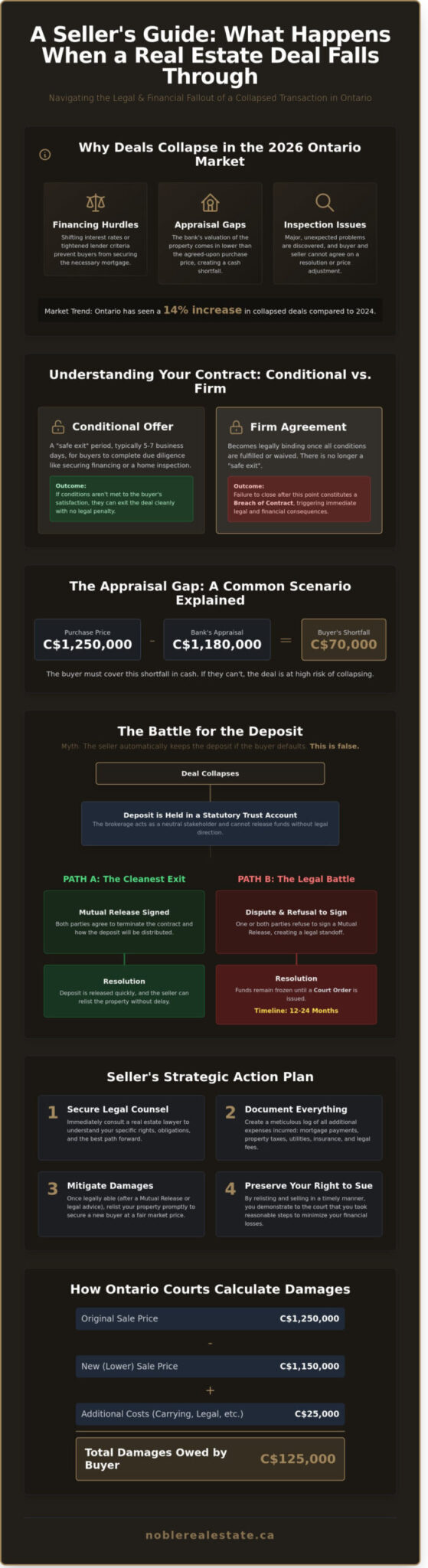
Buying or selling a home in Uxbridge should be a milestone to celebrate. However, the reality of the 2026 market means that sometimes the unexpected occurs. Understanding what happens when a real estate deal falls through starts with the legal framework of the Agreement of Purchase and Sale (APS). A failed deal is essentially a breach of contract where one party fails to meet their binding legal obligations. In the current climate, Ontario has seen a 14% increase in collapsed deals compared to 2024, often triggered by shifting interest rates or home inspection discoveries that parties cannot resolve. For a seller, this creates a logistical ripple effect, especially if they’ve already committed to their next property. For a buyer, it often results in the loss of a significant deposit and potential litigation. The Noble Approach emphasizes proactive communication to mitigate these risks, ensuring every client feels supported through these high-stakes transitions.
Condition Precedents vs. Firm Offers
Conditions serve as your primary defense during the early stages of a transaction. These “condition precedents” provide a buyer with a specific window, typically five to seven business days, to secure financing or conduct a professional home inspection. If these requirements aren’t met to the buyer’s satisfaction, they can exit the deal cleanly without legal penalty. The transaction only becomes “firm” once a Notice of Fulfillment is signed and delivered. If a party fails to close after this stage, they’ve breached a firm contract. This distinction is vital. While failing to meet a condition is a “safe” exit, failing to close a firm deal triggers immediate legal and financial consequences for the breaching party.
The Rise of the Appraisal Gap
The 2026 market has seen specific fluctuations that occasionally leave a gap between the purchase price and the lender’s valuation. If you purchase a property in the Durham Region for C$1,250,000 but the bank’s appraiser values it at C$1,180,000, the lender will only provide a mortgage based on that lower figure. This C$70,000 shortfall must be covered in cash by the buyer to move forward. We’ve seen this scenario become more common as lenders tighten their criteria. To prevent the deal from falling through, buyers must have a strategy to bridge the gap, such as tapping into secondary lending or adjusting their down payment structure. Our focus is on providing the analytical rigour needed to spot these potential valuation issues before they jeopardize your closing date.
The Battle for the Deposit: Who Gets the Money?
When a transaction stalls, the deposit often becomes the primary point of contention. Many buyers and sellers mistakenly believe that if a buyer defaults, the seller automatically keeps the funds. This is a myth. In Ontario, the deposit is held in a statutory trust account, and its release is governed by strict provincial regulations. Understanding what happens when a real estate deal falls through requires looking at the legal framework that keeps these funds in limbo until a formal resolution is reached.
The Role of the Statutory Trust Account
Under the Trust in Real Estate Services Act (TRESA), which updated the previous REBBA standards on December 1, 2023, the listing brokerage holds the deposit as a neutral stakeholder. They don’t simply pick a side or release funds because one party feels wronged. The brokerage is legally bound to hold that money until they receive a Mutual Release signed by both parties or a court order. If a dispute escalates to the Ontario Superior Court of Justice, the timeline for a resolution can stretch from 12 to 24 months. During this period, the capital remains locked away, earning minimal interest and helping neither party.
Mutual Release: The Cleanest Exit
A Mutual Release is a legal document where both parties agree to terminate the Agreement of Purchase and Sale and specify exactly how the deposit will be distributed. It’s the most efficient way to move forward. Sellers often face a difficult choice: sign the release quickly to get the home back on the market, or refuse to sign and risk a lengthy legal battle. Taking strategic steps after a failed transaction involves weighing the immediate need for a new buyer against the potential for damages.
If one party refuses to sign, the deposit stays in the brokerage’s trust account indefinitely. This can be devastating for a seller who needs those funds for their next purchase or a buyer whose capital is tied up. Consider these factors before refusing to sign:
- Market Volatility: A 5% drop in home prices over a three-month legal delay can cost more than the deposit itself.
- Legal Costs: Retaining a litigator for a Superior Court case can quickly exceed C$10,000 to C$15,000.
- Opportunity Cost: Locked funds cannot be reinvested or used as a down payment on a different property.
At Noble Real Estate, we take a financially savvy approach to these disputes. We help you analyze the net present value of a settlement versus the costs of litigation. If you’re facing a complex closing or a potential default, it’s vital to consult with an experienced advisor who understands the analytical and emotional sides of these high-stakes moments.
Legal Consequences and Financial Damages in Ontario
Understanding the financial fallout is the first step in protecting your interests when a transaction fails. In Ontario, the legal system uses the concept of “damages” to restore the innocent party to the position they would’ve held if the transaction had succeeded. This principle aims to make the seller or buyer “whole” again through monetary compensation rather than just punishment for the breach.
When a buyer defaults, they risk far more than just their initial deposit. While the deposit is often forfeited to the seller, the buyer remains liable for any additional losses that exceed that amount. If a home in Uxbridge was originally contracted for C$1,100,000 but the market shifts and it eventually sells for C$950,000, the buyer could be sued for the C$150,000 difference plus all associated costs. This reality is a central part of what happens when a real estate deal falls through in a fluctuating market.
Sellers have a strict “Duty to Mitigate” their losses under provincial law. They can’t simply sit on the property and wait for a lawsuit to resolve or allow the home to linger on the market at an unrealistic price. They’re required to act reasonably and relist the home promptly at a fair market value to secure the highest possible price, which reduces the total damages the defaulting buyer eventually owes.
Calculating the Resale Price Gap
Damages are fundamentally defined as the delta between the original contract price and the final sale price achieved after the breach. Beyond this gap, the claim includes carrying costs like mortgage interest, property taxes (often C$450 to C$950 per month for local residential properties), and utility bills incurred during the unexpected time on the market. You’ll also need to factor in the high cost of justice in Ontario, as legal fees for a breach of contract case can quickly exceed C$25,000, potentially eroding the financial recovery for the seller.
The CPA Perspective: Analyzing Financial Exposure
The Noble Approach applies a rigorous financial lens to determine if litigation is a sound investment for your specific situation. We analyze the “collectability” of a potential judgment because there’s little point in spending C$35,000 on a lawyer if the defaulting buyer has no liquid assets or home equity to seize. Our goal is to assess whether a quick settlement is more profitable than a multi-year court battle. We look at the numbers to see what happens when a real estate deal falls through from a balance sheet perspective, ensuring you don’t throw good money after bad while trying to recover your losses.
Strategic Steps to Take After a Failed Transaction
When a buyer fails to close, the initial shock can feel overwhelming. However, your next moves determine how quickly you recover your financial position. Taking a structured, analytical approach is essential to minimize losses and secure a new, qualified buyer. Follow these four strategic steps to regain control of the situation.
- Step 1: Consult your real estate lawyer immediately. Your lawyer needs to review the specific breach of the Agreement of Purchase and Sale. They’ll determine if the buyer is legally in default and advise you on the status of the deposit, which remains in the brokerage’s trust account until both parties sign a release or a court order is issued.
- Step 2: Document everything. Start a detailed log of all additional expenses incurred because of the delay. This includes extra property taxes, utility bills, landscaping costs, and the interest on bridge financing. If you’re paying C$2,000 a month in additional carrying costs, every day matters for your eventual damage claim.
- Step 3: Evaluate Mutual Release vs. Litigation. You must decide whether to sign a Mutual Release to get the home back on the market quickly or pursue the buyer for the difference in sale price. If the market has dipped and you eventually sell for C$50,000 less than the original price, you may have grounds to sue for that deficit.
- Step 4: Relist with a refreshed strategy. Don’t just put the sign back up. You need a plan to address buyer concerns and attract a more stable offer.
Relisting Your Home in Uxbridge or Durham
Buyers often wonder what happens when a real estate deal falls through and why a property has returned to the market. We address this “back on market” stigma with total transparency. By clearly stating the previous deal failed due to buyer financing or personal circumstances, we protect your home’s reputation. We pivot our marketing to attract firm, well-qualified buyers who have undergone rigorous financial vetting. For a deeper look at our local methodology, see our Selling Your Uxbridge Home: A Strategic Guide.
Communication Protocols During a Breach
High-stress negotiations require a steady hand and professional distance. You should stop all direct contact with the breaching party immediately. Direct messages or phone calls can be used against you in future litigation. The Noble Approach utilizes professional intermediaries to manage all dialogue. This de-escalates the situation and ensures that every communication is purposeful and legally sound. Our background in financial rigour allows us to focus on the numbers and the contract, removing the emotional volatility that often complicates a breach. We keep the process straightforward so you can focus on your next chapter.
If you’re facing a difficult closing or need to pivot your strategy, reach out to Noble Real Estate for a professional consultation to protect your investment.
How ‘The Noble Approach’ Protects Your Interests
The Noble Approach isn’t just a marketing slogan; it’s a methodology rooted in financial precision and analytical rigour. When you understand what happens when a real estate deal falls through, you realize that most failures occur because of overlooked financial details or weak buyer qualifications. As a CPA-led agency, we apply a level of scrutiny that goes far beyond standard real estate practice. We don’t just look at the offer price on the contract; we evaluate the probability of that offer reaching the finish line without a hitch.
Minimizing the risk of what happens when a real estate deal falls through requires a proactive strategy that begins the moment an offer is received. Our background in finance allows us to dissect the strength of a buyer’s position, ensuring that our sellers aren’t left stranded weeks after accepting an offer. We believe that professional expertise should provide a safety net, allowing you to move forward with absolute confidence in your transaction.
Vetting Offers Beyond the Price Tag
A high purchase price is a trap if the buyer cannot actually secure the necessary financing. In the current Ontario market, we’ve seen appraisal gaps lead to deal collapses when buyers overextend themselves. We mitigate this by demanding more than a standard pre-approval letter. Our vetting process includes verifying the following factors:
- Verified Proof of Funds: We look for confirmation that the buyer has the liquid assets required for the down payment and closing costs.
- Substantial Deposits: We push for deposits in the range of 5% to 8% of the purchase price. A significant deposit ensures the buyer has skin in the game and provides a financial cushion for the seller if a breach occurs.
- Mortgage Specialist Credibility: We often contact the buyer’s lender to confirm that the pre-approval is based on a full document review, not just a verbal conversation.
By vetting these details before the “Sold” sign ever goes up, we protect our sellers from the common pitfalls that occur during the typical 5 to 10 day conditional period. This financial scrutiny is a cornerstone of our end-to-end approach, ensuring that every offer we present is backed by more than just a hopeful signature.
Your Partner in Stress-Free Real Estate
Our commitment is to make your transition as straightforward and successful as possible. Whether you are currently browsing Houses for Sale in Uxbridge: A Buyer’s Guide or you’re preparing to list a luxury property, we provide the steady hand you need. We handle the complex negotiations and the fine-print financial details so you don’t have to carry that burden alone.
This commitment to client success and financial diligence is what sets top real estate professionals apart, regardless of their location. As an example of a relationship-driven team that applies similar principles in the competitive San Diego market, you can discover Cardenas & Company Real Estate Group.
You deserve a partner who views your home as a significant financial asset and treats it with the respect that a major investment requires. We are here to guide you through every hurdle with transparency and professional poise. It’s time to redefine your expectations and get in touch today to experience a higher standard of real estate service that puts your interests first.
Secure Your Financial Future in the Ontario Market
Navigating a collapsed transaction requires more than just legal knowledge; it demands financial precision and a calm head. You now understand the complexities of deposit disputes and the potential for significant damage claims in Ontario’s 2026 market. Expertise makes the difference. Protecting your investment means acting quickly to mitigate losses while following the specific protocols required by provincial regulations. Knowing what happens when a real estate deal falls through ensures you don’t make costly mistakes when the stakes are highest.
Colin Noble brings the analytical rigour of a CPA, CA to every transaction, providing the financial oversight needed to navigate these high-stakes moments. With deep roots in Uxbridge and the Durham Region, our team offers the end-to-end support required to turn a stressful setback into a successful new beginning. We focus on “The Noble Approach” to redefine your expectations and provide a stress-free path forward.
Experience ‘The Noble Approach’—Contact Colin Noble for a Reassuring Consultation
Your real estate goals remain within reach with the right partner by your side.
Frequently Asked Questions
Can a buyer back out of a real estate deal during the cooling-off period in Ontario?
In Ontario, a buyer can only back out during a cooling-off period if they’re purchasing a brand-new condominium from a developer. This mandatory 10-day period is established by the Ontario Condominium Act and allows buyers to cancel the contract for any reason. For resale homes in Uxbridge or the GTA, there’s no statutory cooling-off period. Once you sign a firm offer on a pre-owned home, you’re legally bound to complete the purchase.
What happens to the deposit if a real estate deal falls through due to financing?
The deposit is typically returned to the buyer if the deal includes a financing condition that wasn’t met. If the buyer fails to secure a mortgage and provides notice before the condition deadline, the funds are released via a mutual release. However, if the offer was firm or the condition was already waived, the seller may retain the deposit as liquidated damages. Most brokerages require a signed agreement from both parties before they’ll release funds from a trust account.
Can a seller sue a buyer for backing out of a firm offer?
Yes, a seller can sue a buyer who backs out of a firm offer to recover financial losses. When a real estate deal falls through, the seller is entitled to seek damages that put them in the same position they would’ve been in if the sale closed. In Ontario, courts consistently rule that buyers are responsible for making the seller whole again. This legal process ensures that the innocent party doesn’t suffer because of a breach of contract.
How long does it take to get a deposit back after a mutual release is signed?
It usually takes between 2 and 10 business days for a brokerage to process a deposit return after all parties sign a mutual release. The brokerage holding the funds in trust cannot release the money until they have written consent from both the buyer and seller. Once the document is processed, the brokerage typically issues a cheque or an electronic transfer to the buyer’s lawyer or the buyer directly. The Noble Approach ensures this process stays as efficient as possible for our clients.
What is a ‘Mutual Release’ and is it mandatory to sign one?
A Mutual Release is a legal document where both parties agree to cancel the Agreement of Purchase and Sale and release each other from further liability. It’s not mandatory to sign one, but it’s the standard way to resolve a failed deal without going to court. Without this signed document, the deposit remains stuck in the brokerage’s trust account. Neither party can easily move on to a new transaction until the legal dispute is settled or the release is executed.
What happens if a house resells for less than the original failed contract price?
If a home resells for C$50,000 less than the original contract price, the original buyer is usually liable for that C$50,000 difference. They may also be responsible for the seller’s additional carrying costs, such as property taxes and mortgage interest, incurred during the delay. Ontario case law, including the 2017 ruling in Gamoff v. Hu, confirms that defaulting buyers must cover these specific financial gaps to protect the seller’s financial interests.
Does the real estate agent still get paid if the deal falls through?
Real estate agents may still be entitled to commission if a deal falls through due to a buyer’s default on a firm offer. Most Ontario Real Estate Association listing agreements state that commission is earned once a valid, binding offer is accepted. While many agents waive this fee to maintain client relationships, the legal right to collect payment often exists. If the seller successfully sues the buyer for damages, the commission amount is frequently included in the total claim.
Can I buy another house if my current sale has fallen through but isn’t legally resolved?
You can legally sign a contract for another house, but it’s a high-risk strategy if your current sale is stuck in legal limbo. Most lenders won’t provide a second mortgage if your original equity is tied up in a failed deal. According to 2023 lending guidelines, you must prove you have the liquid capital to carry both properties or settle the dispute before a bank approves new financing. Taking this step without a clear resolution can lead to a cascade of failed closings.